Structured/Scored Improvisation in January/February

This is an early announcement and call for participants for a research project I will be doing in January/February 2013, focusing on structured group improvisation. This project is part of my studies’ research on composing for interdisciplinary, collaborative improvisation groups, and it combines the composition of scores with composing in the moment through improvisation.

WHEN: This research project will happen in 3 sessions: 17th and 24th of January, and 7th of February 2013, from 13:00 to 17:00. Please note that the sessions are sequential, which means you need to commit to attending all three of them.

WHAT’S GOING TO HAPPEN: In these sessions, we’ll be exploring in detail just how a pre-fabricated score or set of rules can be used as a starting point for group improvisation and collaborative composition, as well as a tool for achieving connectedness between the improvisers. It is already stated in this blog’s Knowledge Base that “crisp and open interaction does not happen without a shared, transparent context,” and that “the more you have a clear picture of the context you are in, […] the more connected you will feel” with the other performers. My wish is to explore how could a score provide this very transparency and clarity of context for interaction to happen; in other words, how can a score, that is composed especially for improvisers, be designed in such a way that it conditions interaction and expression, and could become a helpful support for the sought-after precision, control and focus within an improvisation context. Can a score solve problems of performance, while subtly adding to the complexity of the improvising moment?

As a classically trained composer myself, I’m also interested in how does the role of the composer change within such a context and when facing these questions. I don’t have a particular vision or idea about what the final “product” of the sessions will be. All I know is that we will use a score as a starting point for experimentation and discussion, and that while tackling the aforementioned questions (and others that will come up during the process) a performative event will emerge out of our sessions. On the last day of the sessions we’ll be doing an informal sharing, where we’ll invite a group of friends and colleagues to come and watch, give us feedback, and discuss about our findings and process.

WHO: I encourage experienced improvisers and performers from any artistic background to sign up. As I already mentioned, it’s required that the participants commit to all 3 sessions; unfortunately I deem this necessary, because the work will be created in collaboration with the group, and it will grow based on our day-to-day work throughout the three sessions.

If you are interested please let me know by the 20th of December, so that I can then organise the group and prepare the score accordingly. You can sign up to the sessions by posting a comment below this post.

Also note that the sessions will be documented in video and audio, for archiving and research purposes. The plan is then to create a small documentary of the sessions, to be posted online as a research film and also accompany my thesis. (We’re looking for two cameramen! Let me know if you know someone.)

Normally participants of the Carpet Sessions are asked to donate a small amount, so that the rent of the studio can be covered. However, I’m looking for some funding at the moment, so maybe this cost could be paid for you. (I will keep you posted.) You can find more about the Carpet Sessions (info, address, etc) here.

This message is an early invitation to the sessions, so some things might change on the way! More info will follow in December, about the details of the research questions, the score, the group formation etc. Looking forward to your messages and participation!

ABOUT ME: I’m Kiriakos Spirou, a composer and pianist from Cyprus, currently studying Music Design at the Utrecht School for the Arts, while also doing research at Bournemouth University in the UK. You can find out more about me and my work on my blog. You can also stalk me on Facebook/kiriakos.spirou. I’d be happy to answer any questions you might have via kirispirou@gmail.com, or in the comments below.
8 november and 20 december – Shadow Carpet

Shadows…
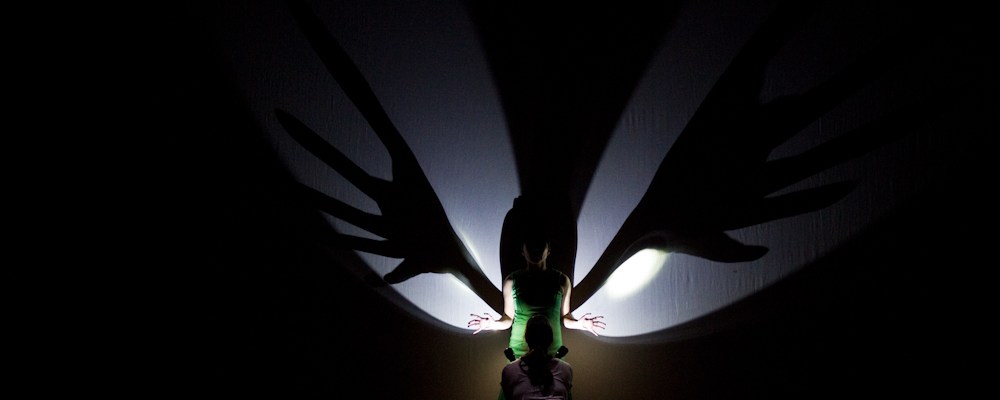
Makiko Ito and Marije Nie make an investigation into the world of moving shadows, using active lighting with flashlights. We want to investigate how simple light and shadows can work as spacial and hieroglyphic moving elements in improvisation, by influencing and creating perspective, direction, size, mood, multiplicity, dynamics and so on. Working with simple heavy duty flashlights we can also create low-tech images, shifting landscapes and depth.

Anyone who is interested to light and be lighted can join these sessions.

What are the Carpet Sessions? / Where is the studio?  (click here)

Shadows. Flattened to two colourless dimensions and fluid form. Multiplied by light, moved by light.
In black and white 2D both humans, instruments and objects loose their object-ive stability and become subjective, mixable, elastic, doubled, fragmented… and unified.. A fascinating aspect of shadows is that it shows the gaze of the be-lighter through the negative image. It invites lively games between be-lighter and be-lighted.

picture Nellie de Boer

Objects and stuff in November/December

Object/visual theatremakers and puppeteers Lindai Boogerman and Martine van Ditzhuyzen will lead with me an exploration of objects and improvisation in November/December. With the subtle relationship in mind that a puppeteer/object-player can have with ‘stuff’/things/material, we want to know how we can use this for interdisciplinary instant composition. We would like to involve and ask not only puppet players, but more so musicians, dancers, actors, lighting/visual people,… to interact with material that accompanies them on stage.

22nd of November 2012 

6th of December 2012

13th of December 2012

Sessions (14:00-17:00) will be semi-open, meaning we would like to define the group of researchers beforehand. Preference is to people who can join all three sessions, but exceptions can be made. Just talk to us.

What are the Carpet Sessions? / Where is the studio?  (click here)

We will post more detailed information end of October. But you can already write your comments below to state your interest in the subject or if you have a question.

greetings!

Thomas, Martine, Lindai

Instant Composition Conducting

On 18th of October 2012, we’ll do a session about instant composition conducting in interdisciplinary context.

My experience with the Vienna Improvisers Orchestra will serve as background to look at the implications of having one focal point through which the improvisers (of any discipline) engage with the material at hand: the conductor.

For working with large ensembles in musical textures I founded the term ‘instant composition conducting’ and developed a method which was invented mid of the 80ies by Butch D. Morris in the US. Meanwhile this work brought me together with some of the improvising european orchestras. We were working for concerts and festivals in Spain, Liechtenstein, Japan, Germany, and most recently in Sicily. Please find some video-links futher down.

This time the session will be connected to a performance in Maarten Luther Kerk, Amsterdam on Wednesday, 24th of Oktober.

I would like to work with any improvisation professional who is ready to engage in this process (light/video/dance/music/words) and who is available both 18 and 24 October.

This session/project will be semi-open, meaning: please react before 4 October whether you would like to join. Then, we will fix the group for the research session and performance.

What are the Carpet Sessions? / Where is the studio?  (click here)

regards from Vienna,

Michael Fischer

2012 instant composition conducting for the RARA festival, Sicily
http://www.youtube.com/watch?v=aUoKeopv1PI&

2011 VIO with choir
http://www.youtube.com/watch?v=FjjgNrMLNFU&feature=relmfu
http://www.youtube.com/watch?v=60Dev1ZZIxU&feature=relmfu

2007 VIO with poets Magdalena Knapp-Menzel and Gerhard Jaschke
http://www.youtube.com/watch?v=RarR_lX9Ufs&feature=related

Image

http://m.fischer.wuk.at/

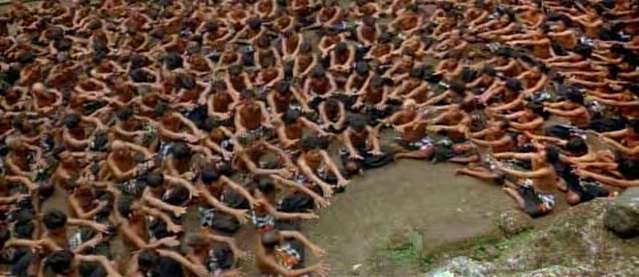
Reminder: Kecak session #2 Interlocking as moving mechanism

Tomorrow: Session Interlocking #2
In this session we will continue with the translation of the interlocking rhythms of kecak into from vocal to movement and space. In session #1 we discovered that using these interlocking vocal rhythms as a base for movement improvisation gave a suprisingly dynamic and interesting balance between individual freedom, partnerships and group connectedness. In this second session we will continue to work on the principles of interlocking. First we will explore the group work more deeply, focussing on the various relationships inside the structure. Then we will see if and how these principles function as a continuously evolving structure that can lead into stories (in dance, song, words, music).

Important: Crash Course Kecak @ 13:30
To open up session #2 for a bigger group I will offer a 30-minute crash course in vocal kecak for those who are new kecak and wish to participate in the session It is also recommended if you have done kecak before but not last week! This crash course is necessary to be able to do the work, so please let me know if you want to join.

Practical
Session leaders: Marije Nie and Thomas Johannsen
13:15 doors open
13:30 – 14:00 crash course kecak
14:00 – 17:00 session #2 Interlocking
For more practical info, address etc see ‘Carpet Sessions’ -> ‘Why Where When Who?’
Please post any questions, remarks and attendance here, and we will answer you.

Interlocking Principles and Common Ground

Thursday 13 September / Thursday 20 September 2012

Time: 13:30 doors open – build up / warm up  –  14:00-17:00 sesssion

Starting off the season this year is a closer look at the interlocking Ketjak rhythms as a binding element for instant composition pieces.

We are interested to research two aspects more:

1. the way the ketjak rhythms form an undercurrent and fertile ground for other things to happen on top of and through it (solo’s, duet’s…). How does the group react/relate when that is happening? What sort of overall dramaturgy does this create for a longer piece?
2. the way the principle of ‘interlocking’ can be used for other improvisation material. To explain: the ketjak is in fact one simple rhythm that interlocks with up to eight ‘copies’ of itself, shifted in time. How could this be translated to the on-the-spot development of choreography or theatre? E.g.: replicated dance phrases that interlock, pieces of monologue that are copied/repeated/shifted.

Please comment on this post to announce that you want to be part of these sessions.  Any questions? Ask!

Marije Nie
Thomas Johannsen

CC #24 Pathways in sound and movement

Dear improviser,

Starting this thursday: 3 new sessions called ‘Pathways in sound and movement’.

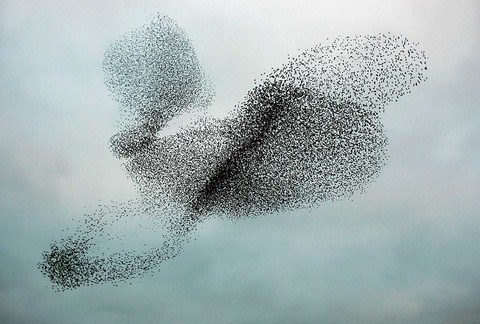
Tow years a go I studied with David Zambrano focussing on his groupimprov-technique called ‘passing through’. In ‘passing through’ we recognize figures from nature, such as a group of starlings flying in the air. They create organic formations and dynamics composed of many individual birds, becoming one large body with its own pathway.

During those sessions I want to focus on how we translate the basic principles of this technique so we can apply them easily to other disciplines, such as music, theater and visual art. Continue reading